

If you or a loved one is experiencing cancer, navigating care options can feel overwhelming. One of the most important decisions you’ll face is choosing where to receive treatment. Understanding the differences between hospital-based and community-based cancer programs can help you make the best decision for your unique health and treatment priorities.
Community-based cancer care offers specialized, high-quality treatment closer to home, often with a more personalized approach and lower costs. Hospital-based care provides access to complex surgical teams and rare cancer expertise. Both settings offer evidence-based treatment, but they serve different patient needs in distinct ways.
A community cancer center offers specialized, high-quality cancer care in a local community setting. Rather than traveling to large hospital campuses, patients receive treatment in regional towns, suburbs, or local medical facilities. These centers are designed to bring advanced cancer care directly to the communities where patients live and work. These cancer centers are often independent, physician-owned clinics that focus on delivering personalized care.
Community oncology provides comprehensive treatments, such as targeted therapies, immunotherapy, and chemotherapy, from a single, dedicated team of nurses and physicians. This model prioritizes continuity of care so you can build lasting relationships with your providers throughout your treatment journey.
Community-based oncology offers the following benefits:
Hospitals and community oncology centers meet different needs. A hospital is more equipped to handle rare cancers and complex surgeries that require specialized, high-volume surgical teams and intensive care resources.
Community oncology centers provide care for the majority of common cancers, such as breast, lung, colorectal, and prostate cancers. Many offer the same advanced treatments and technologies available at larger hospitals, with the added benefits of proximity to home and personalized care from a consistent team. The physicians at community cancer centers bring the same level of expertise and stay current with the latest evidence-based treatment protocols.
Community oncology centers and hospital outpatient departments both offer high-quality, evidence-based treatment, but community oncology centers tend to offer a more patient-centered experience. Consider the following additional differences between hospital-based and community-based cancer care to make the best decision for yourself or a loved one:
Hospital-based care is often more expensive than community-based care due to higher facility fees and administrative overhead. Community oncology clinics tend to have lower operational costs, which lets them offer the same services at more affordable prices. This can translate to meaningful savings on treatments, medications, and supportive care services throughout your cancer journey.
Care is more personalized, helping patients avoid redundant — and often costly — testing. The proximity to home also means lower travel expenses.
Community-based oncology is typically in a more convenient location than large hospitals. Rather than driving long distances to sprawling medical campuses, you can receive treatment closer to home.
This proximity reduces travel time and stress. Many patients find they have more energy and time to spend on the things that support their well-being, whether that’s rest, family time, or maintaining work and daily routines.
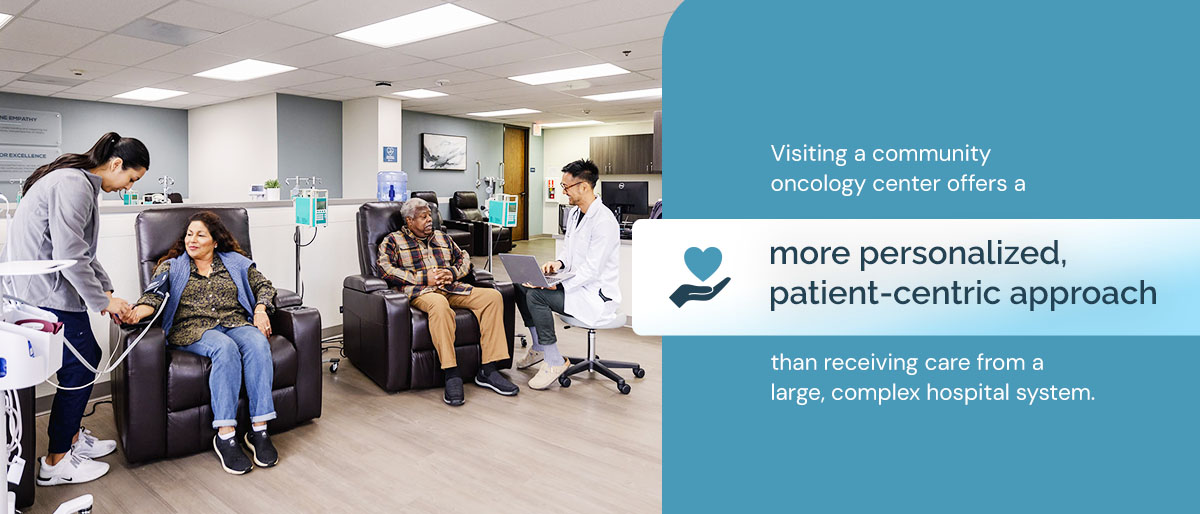
Visiting a community oncology center offers a more personalized, patient-centric approach than receiving care from a large, complex hospital system. When you receive treatment from a community practice, you get to see the same team of doctors and nurses at each visit.
Community oncology is often a more comfortable setting because your providers have the time to get to know you personally. They understand your health history, your concerns, and your goals. Oncology centers may offer additional services, such as compassionate counseling, to help you navigate any uncertainty or emotions you may experience after your diagnosis. Your healthcare team will also be familiar with your local community and can help you connect with qualified professionals in your area when needed.
Community cancer centers provide high-quality care by basing your treatment plans on your personal health goals and the outcomes that matter most to you. While hospitals operate on a traditional fee-for-service model, a quality-focused cancer care center rewards providers for positive patient health outcomes and the overall quality of care they provide.
A community-based care center offers a more streamlined care journey that minimizes redundant testing, reduces unnecessary procedures, and honors your preferences every step of the way. Your well-being is at the center of every decision.
Hospital-based and community-based cancer care centers can both help you access various clinical trials. Hospitals typically handle early-stage trials and research on rarer, more complex cancers that require specialized research infrastructure.
If you have a common cancer, you may be able to access promising new therapies at a community-based cancer center without traveling to a major medical center. Many community-based cancer clinics participate in clinical trials and multisite research studies, which can provide patients with access to emerging treatments without traveling to major medical centers.
Ask yourself the following questions to make the best decision for you or your loved one’s needs:
If you’re looking for high-quality, personalized cancer care closer to home, a community oncology center may be the right option for you. The Oncology Institute offers excellent cancer care, a compassionate team of providers, and new treatment opportunities at convenient locations.
At The Oncology Institute, we’re passionate about changing oncology for the better. We will walk alongside you in your diagnosis and help you reach your personal health goals at more affordable costs. Find a location near you and schedule an appointment today to learn more about how we can support you.